









By Dr. Natasha MacLeay
If you’re interested in gut health, you’ve probably heard the terms prebiotic, probiotic, and postbiotic tossed around. And if you’ve done any microbiome testing or metabolic research lately, there’s a good chance you've come across Akkermansia muciniphila—a gut bacterium that’s earned a bit of a cult following in the microbiome world.
But what do these actually do? Who should be using them? How long does it take to feel a difference? And how can you support your metabolism alongside Akkermansia?
Let’s break it down.
How Does Akkermansia Work?
The lining of your intestines is coated in a protective mucus layer made of a protein called mucin. This barrier helps trap harmful microbes and prevents them from damaging your gut lining. When the mucus is too thin, it increases your risk of irritation, inflammation, leaky gut, and symptoms like pain, diarrhea, or colitis. But if it’s too thick, it can slow motility, hinder nutrient absorption, and trigger immune overactivation.
Akkermansia muciniphila—literally named for its love of mucus (mucin + philia)—feeds on this layer. Think of it like Pac-Man for your microbiome: it clears out old mucus, which in turn stimulates your body to produce fresh mucus. This process is key for maintaining gut barrier integrity, regulating inflammation, and supporting metabolic and immune health.
Why Akkermansia Has Become So Popular
Unlike most probiotics that rely on fiber to survive, Akkermansia thrives on mucus. This makes it uniquely effective in influencing gut lining repair and metabolic health.
Here’s why it's become a microbiome superstar:
-
Strengthens the gut barrier1
-
Promotes healthy glucose and lipid metabolism2
-
Reduces low-grade inflammation1
-
Associated with lower body weight2
-
Stimulates GLP-1 production (a hormone involved in appetite, insulin, and metabolism)2
-
Produces short-chain fatty acids (especially propionate), which fuel gut cells and regulate energy balance
Research shows that people with healthier metabolic profiles often have higher levels of Akkermansia. Low levels are commonly found in individuals with obesity, diabetes, inflammation, or metabolic syndrome.3 And when you consider the inflammatory nature of many modern diets, it’s no surprise this bacterium is in the spotlight.
Can You Have Too Much Akkermansia?
Yes—balance is everything when it comes to the microbiome.
Excessive Akkermansia may:
-
Over-degrade the mucus barrier
-
Lead to visible mucus in stool or constipation
-
Heighten gut sensitivity or inflammation
-
Be associated with autoimmune flares
-
Show up in children with eczema, asthma, or food allergies
This is why microbiome testing is so important. We’re not looking for the most—we’re looking for the right amount.
Who Benefits Most from Supporting Akkermansia?
You may benefit from boosting your Akkermansia levels if you:
-
Have prediabetes, insulin resistance, or metabolic syndrome3
-
Struggle with bloating, constipation, or sluggish motility
-
Have a history of antibiotic use (which often wipes out Akkermansia)
-
Are in perimenopause or postmenopause and experiencing metabolic changes
-
Suffer from eczema, asthma, or other atopic conditions
On the flip side, if you're underweight, dealing with autoimmunity, or noticing excess mucus, it’s best to consult a practitioner before adding Akkermansia-boosting strategies.
How Long Does It Take to See Results after adding Akkermansia into your wellness routine?
Gut health isn’t instant—but with consistency, changes happen.
-
Digestive improvements: 2–4 weeks
-
Metabolic shifts (glucose, lipids, weight): 8–12 weeks
-
Barrier support and immune balance: noticeable around 3–4 weeks
This is a long-term strategy, not a quick fix.
How to Support Akkermansia Naturally
1. Polyphenol-Rich Foods
Pomegranate, green tea, cranberries, red cabbage, and grapes help feed Akkermansia and reduce inflammation.
2. Resistant Starch
Cooked-and-cooled potatoes, green bananas, and lentils nourish short-chain fatty acid producers that work synergistically with Akkermansia.
3. Intermittent Fasting
Akkermansia may thrive during fasting, especially in time-restricted eating windows—but overdoing it can backfire by over-thinning the mucus barrier.
4. Strategic Supplementation
Look for products containing Akkermansia muciniphila in a pasteurized postbiotic form—meaning the bacteria are no longer alive, but still biologically active. This form has been clinically shown to support gut lining repair, improve glucose metabolism, and increase GLP-1—without overstimulating the immune system.
Bonus if the formula also includes prebiotic fibers like fructooligosaccharides (FOS) to support your native gut flora.
So Wait—What’s the Difference Between Pre-, Pro-, and Postbiotics?
Now that you understand how Akkermansia works, the distinctions are easier to grasp:
-
Prebiotics (like FOS) = fibers that feed good bacteria
-
Probiotics (like Lactobacillus and Bifidobacterium) = live bacteria that carry out helpful functions
-
Postbiotics (like Akkermansia muciniphila, when pasteurized) = non-living but bioactive bacteria and their fermentation byproducts (like SCFAs) that support immun/e system function, metabolism, and gut barrier repair.
So yes—Akkermansia is technically a postbiotic in its pasteurized form and a probiotic when alive. Interestingly, studies suggest the pasteurized form may actually be more beneficial—delivering all the metabolic and immune perks without the risk of overstimulation.
Final Thoughts
Gut health isn’t about tossing in a random probiotic and hoping for the best. It’s about strategic, evidence-based support—nourishing the right microbes, protecting your gut lining, and giving your system what it needs to thrive.
Akkermansia muciniphila is leading the charge in next-gen microbiome science. When used thoughtfully, it may offer real advantages in metabolism, inflammation, and overall gut resilience.
As always: test—don’t guess. And when in doubt, work with a qualified provider to tailor your gut health strategy.
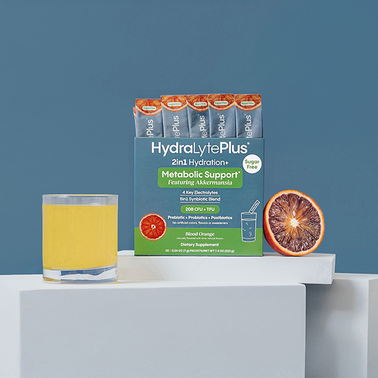
Bonus tip: Staying hydrated (with an electrolyte-balanced formula like HydraLyte Plus Metabolic Support) supports mucus production, motility, and nutrient transport—making it a powerful ally in your gut-healing journey.
Stay curious, stay hydrated and trust your gut.
— Dr. Natasha
References:
1) Mo C, Lou X, Xue J, et al. The influence of Akkermansia muciniphila on intestinal barrier function. Gut Pathog. 2024;16(1):41. Published 2024 Aug 3. doi:10.1186/s13099-024-00635-7
2) Si J, Kang H, You HJ, Ko G. Revisiting the role of Akkermansia muciniphila as a therapeutic bacterium. Gut Microbes. 2022 Jan-Dec;14(1):2078619. doi: 10.1080/19490976.2022.2078619. PMID: 35613313; PMCID: PMC9135416.
3) Dao MC, Everard A, Aron-Wisnewsky J, et al. Akkermansia muciniphilaand improved metabolic health during a dietary intervention in obesity: relationship with gut microbiome richness and ecology. Gut. 2015;65(3):426-436. doi:https://doi.org/10.1136/gutjnl-2014-308778